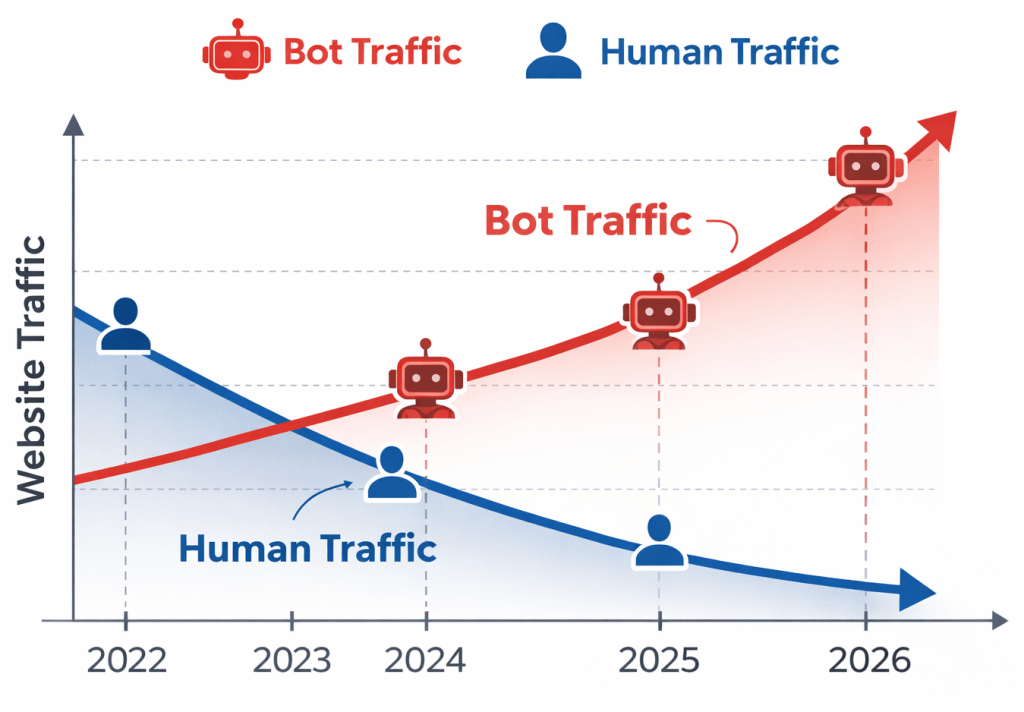
From Keywords To AI Search Visibility
Search visibility used to mean “rank high in Google for specific keywords.” That’s still important, but AI search is adding a new layer:
- AI systems read, summarise, and reason over content across many sites, not just the top ten blue links.
- They return answers, recommendations, and shortlists directly inside AI assistants and chat interfaces, often without the user ever visiting your site.
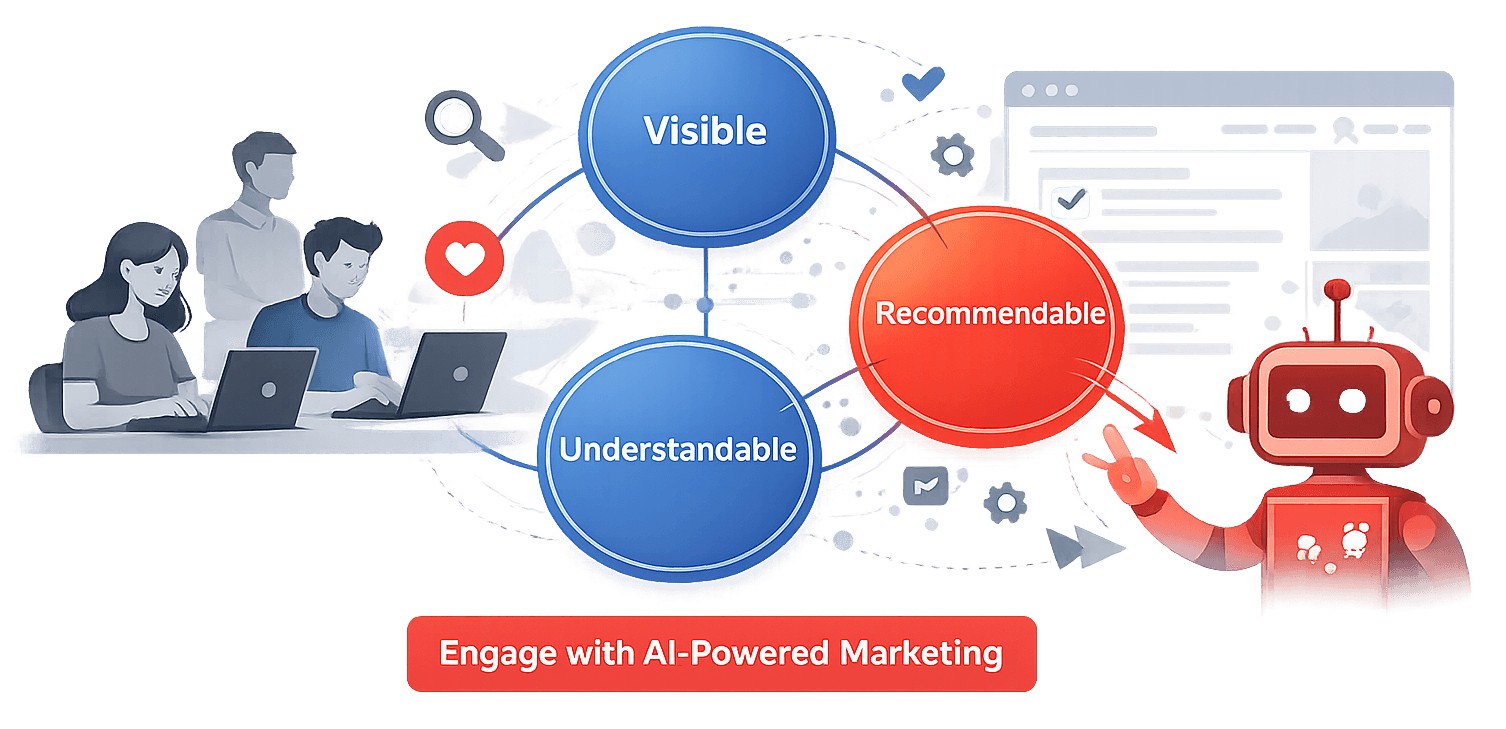
- Visibility becomes about being selected, cited, or recommended by AI—not just being seen by human eyes on a results page.
This means your content must be structured, clear, and rich enough that AI can understand what you do, who you serve, and why you are a good choice. Think of AI search as a “super-user” that reads your site and decides whether you are relevant, trustworthy, and up‑to‑date.
Bots As Your New Visitors
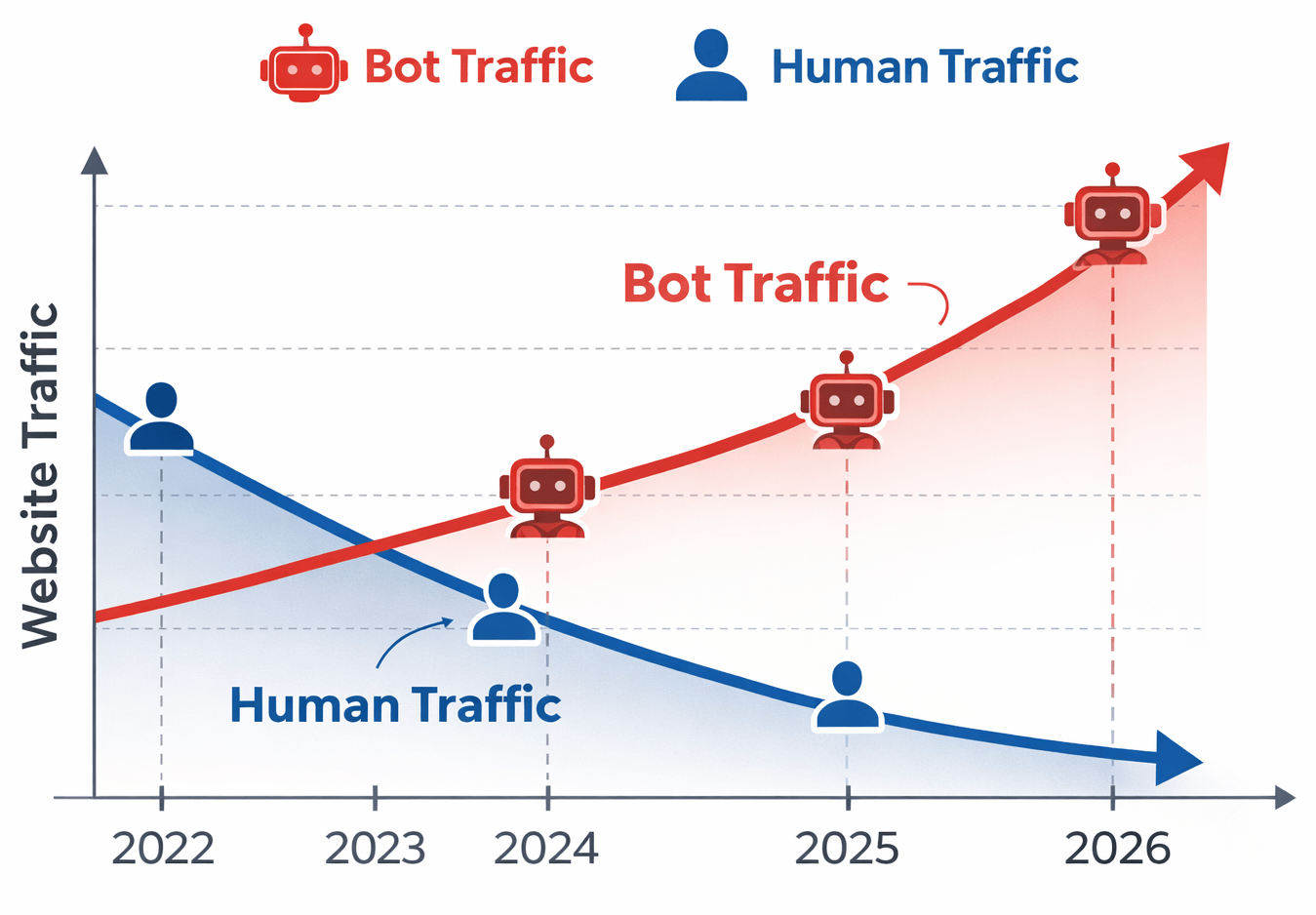
In the emerging landscape, many of your “visitors” will be non‑human:
- Crawlers and AI bots continuously scan your pages to build internal knowledge graphs.
- AI agents browse multiple websites at once, compare offers, and prepare recommendations for users.
- Some bots will simulate user journeys, checking your pricing, FAQs, terms, and product specs automatically.
Instead of designing only for human sessions and click paths, you’re also designing for machine readability and agent workflows. If a human used to open ten tabs to compare suppliers, an AI agent might now do the same in seconds—without any of those visits showing up as classic traffic in your analytics.
[dt_gap height=”10″ /]
AI Agents Making Enquiries For Users
A particularly important change is how enquiries will be made:
- Users will tell an AI assistant what they need (“Find me a local SEO agency that works with B2B tech and can start next month”).
- The assistant will shortlist vendors, visit their sites, and then contact them automatically through forms, chat widgets, or APIs.
- Bots will submit enquiry forms with structured information, negotiate meeting times, and request quotes without the user typing anything into your website.
In this world, your forms, chat flows, and lead capture must be bot‑friendly:
- Simple, logical fields with clear labels and help text.
- Options for structured data (dropdowns, checkboxes) that an AI can map to the user’s requirements.
- Clear confirmations, success messages, and follow‑up steps that a bot can interpret and relay back to the user.
If your forms are confusing, overloaded, or dependent on tricky scripts, AI agents might fail to complete them and move on to a competitor whose site is easier to transact with.
What AI‑Ready Search Engine Marketing Looks Like
Search engine marketing will expand from keyword targeting to full AI‑readiness:
- Content: Write in natural language that clearly explains your services, pricing models, industries served, locations, guarantees, and processes. The goal is to answer the questions an AI agent would ask on behalf of a human.
- Structure: Use headings, bullet points, schema markup, FAQs, and product/service schemas so bots can easily extract facts.
- Trust signals: Display reviews, case studies, certifications, and data points that help AI systems judge credibility.
- Technical health: Ensure fast loading, mobile optimisation, security (HTTPS), and error‑free pages so bots can crawl and parse without friction.
Paid search will also adapt. Rather than just bidding on keywords, you’ll optimise creative and landing pages for AI summarisation and “reasoning.” The better AI systems understand your offer and match it to user intent, the more likely they are to recommend you.
[dt_gap height=”10″ /]
Practical Steps To Prepare Now
You can start future‑proofing your digital presence for AI search and bots today:
- Audit your website for clarity: Can a non‑human easily identify who you serve, what you do, where you operate, and what makes you different?
- Add structured data: Implement schema markup for your organisation, services, products, FAQs, reviews, and articles.
- Simplify lead capture: Reduce unnecessary fields, use consistent labels, and ensure your forms work reliably without complex hacks.
- Optimise answers: Create FAQ sections and in‑depth resources that respond directly to the questions prospects (and AI assistants) actually ask.
- Keep content fresh: Update your core pages regularly so AI systems see your information as current and reliable.
The businesses that win in this next phase of search engine marketing will be those that treat AI systems as a new, powerful class of user—one that reads more, faster, and more critically than any human. If you design your SEO, content, and conversion funnels with AI search and bots in mind, you won’t just keep up; you’ll be in prime position to be recommended first when real customers ask for help.